Sound Healing 101: What Actually Happens to the Brain?
Spoiler: it’s not “just relaxing music.”
There’s a reason certain sounds can make your entire body soften almost instantly.
Think about it:
ocean waves calming your nervous system
a song bringing emotion to the surface
a loud noise making your whole body tense
Sound doesn’t just enter through the ears. It changes us. And in recent years, science has started looking more closely at why sound healing and sound baths can feel so deeply regulating for the body and mind.
So let’s break it down simply.
Not in a “woo” way. Not in an overly clinical way. Just… what’s actually happening?
YOUR BRAIN IS ALWAYS RESPONDING TO SOUND
Your brain is constantly interpreting vibration and frequency. Even when you aren’t consciously paying attention, sound affects:
heart rate
breathing
muscle tension
emotional state
nervous system activation
This is because sound is processed not only through the auditory system, but through areas of the brain connected to emotion, memory, and survival. That’s why certain sounds can instantly feel soothing, while others feel activating or stressful.
WHAT HAPPENS DURING A SOUND BATH?
In a sound healing session, instruments like:
crystal singing bowls
gongs
chimes
drums
tuning forks
create sustained tones and vibrations that the body experiences both physically and neurologically. Unlike music designed primarily for entertainment, sound baths are often slower, repetitive, layered, and immersive. And this matters. Because repetition and rhythm help cue the nervous system toward safety and regulation.
One of the most talked-about effects of sound healing involves brainwave states.
Your brain naturally operates in different frequencies depending on your state:
Beta waves → active thinking, stress, problem-solving
Alpha waves → relaxed awareness
Theta waves → meditation, creativity, dream-like states
Delta waves → deep sleep and restoration
Research suggests meditative practices and certain sound frequencies may help encourage shifts from higher-alert beta states into slower alpha and theta states associated with relaxation and nervous system recovery.
This is part of why people often report feeling:
deeply relaxed
floaty or dream-like
emotionally open
sleepy afterward
or “like time disappeared”
The brain is literally shifting states. One of the biggest benefits people notice from sound healing isn’t mystical at all. It’s nervous system regulation. When the body perceives safety, the parasympathetic nervous system (your “rest and digest” state) begins to activate.
This can support:
slower breathing
lower heart rate
reduced muscle tension
decreased stress hormones
Emerging research on sound therapy and meditation practices suggests sound-based interventions may help reduce stress and anxiety while increasing relaxation responses in the body. And honestly, many people are walking around chronically activated without realizing it.
So when the body finally experiences stillness and regulation? It can feel profound.
WHY EMOTIONS SOMETIMES SURFACE
This surprises people sometimes. They come expecting relaxation, and suddenly they feel emotional. But this can make sense neurologically. When the nervous system softens and the body leaves a hyper-alert state, emotions that were being held down or moved past can finally come up. Not because something is wrong. But because there’s finally enough safety and stillness for the body to process.
The research around sound healing is still growing, and it’s important to be honest about that.
Scientists are actively studying:
brainwave entrainment
sound frequency effects
vagus nerve stimulation
meditation states
stress reduction and mood regulation
Some studies show promising effects on relaxation, mood, anxiety, stress reduction, and cognitive states, while researchers also acknowledge that more large-scale studies are needed. But one thing is very clear: Sound affects the human nervous system. And many people experience meaningful shifts in how they feel after these practices.
You don’t need to know neuroscience to experience the benefits. You don’t need to “believe” in sound healing for your body to respond to vibration, rhythm, and rest. Sometimes the most healing thing isn’t figuring something out. It’s allowing yourself to pause long enough to feel.
If you’re curious about sound healing:
start with a guided sound meditation
attend a local sound bath
listen with headphones in a quiet space
notice how your body responds rather than analyzing it
The experience is often less about “thinking,” and more about receiving.
At Inner Light, our sound healing experiences are designed to support deep rest, nervous system regulation, and reconnection.
Whether through:
sound baths
Yoga Nidra + sound
Reiki + sound experiences
or meditation practices
these spaces are invitations to soften, slow down, and allow the body to reset. Sometimes your nervous system needs that more than you realize.
UPCOMING EVENT:
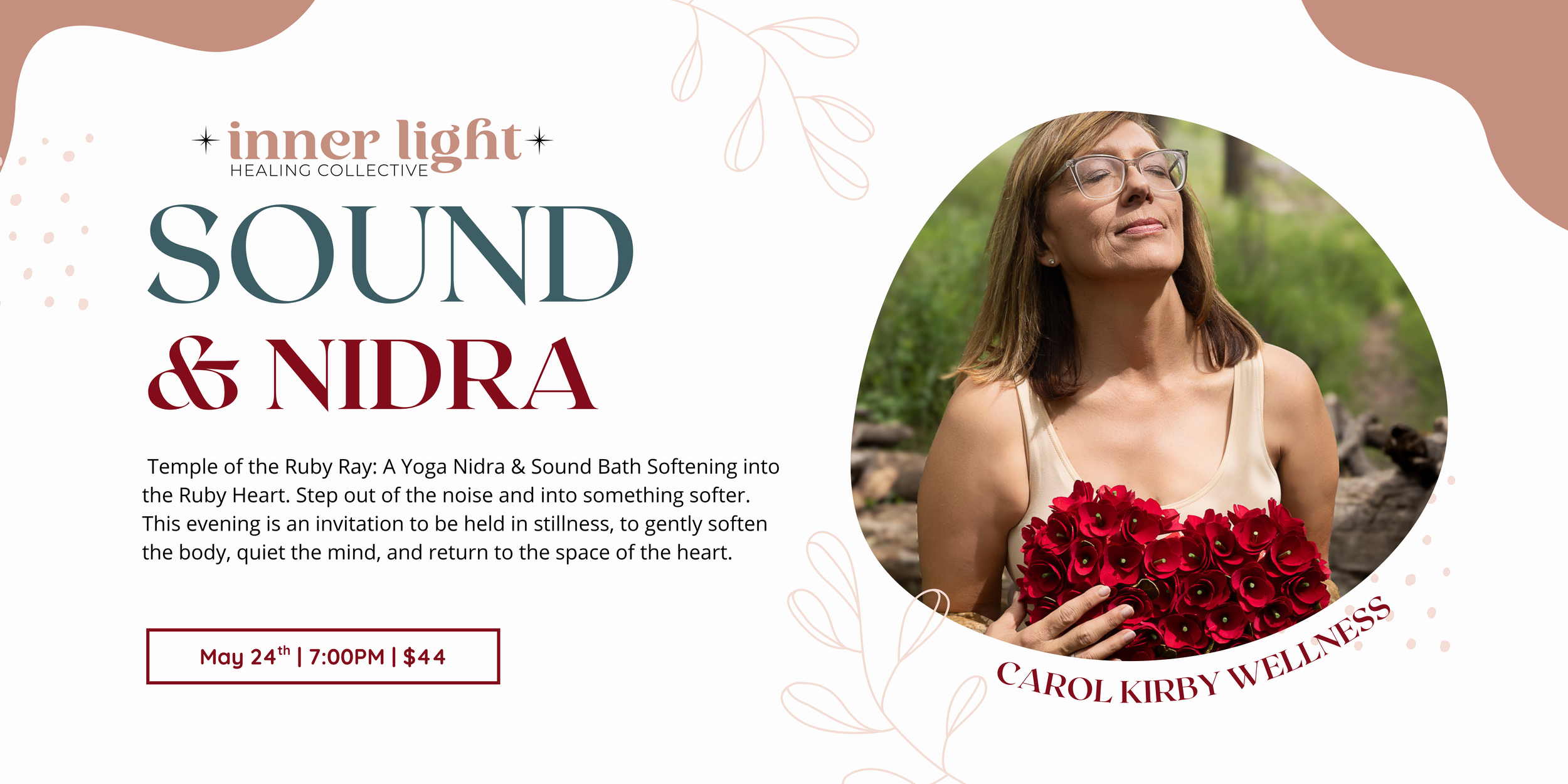
Resources & Further Reading, If you’d like to explore more: UCLA Health — sound therapy overview and current research | Psychology Today — accessible articles on sound meditation and brainwaves | National Center for Biotechnology Information — published reviews on sound vibration and meditation research