Yin Yoga: The Practice Your Body Didn’t Know It Needed
Yin Yoga is often misunderstood.
It’s not about stretching deeper or pushing harder. It’s about slowing down long enough for your body to exhale.
In a Yin practice, poses are held for several minutes at a time. Not to force flexibility, but to gently access the deeper layers of the body: the fascia, the joints, and the nervous system itself.
This is where the shift begins.
What Makes Yin Different. Most styles of yoga focus on the muscles, building strength, creating heat, moving with rhythm. Yin is different.
Instead of activating the muscles, we soften them. Instead of moving, we stay.
This allows us to reach the connective tissues, fascia, ligaments, and joints, which respond best to slow, sustained pressure rather than dynamic movement.
Fascia, in particular, plays a huge role in how we feel in our bodies. It surrounds and supports everything, muscles, organs, bones, and it can become tight, dehydrated, and restricted over time (especially with stress or repetitive movement).
Yin helps rehydrate and gently stress these tissues in a way that supports mobility, circulation, and overall balance.
The Nervous System Shift. But Yin isn’t just physical.
It works deeply with the nervous system. When we slow down and hold shapes for longer periods, the body begins to shift out of a sympathetic (fight-or-flight) state and into a parasympathetic (rest-and-digest) state.
This is where:
the breath deepens
the heart rate slows
the body begins to repair
For many people, this is the first time all day their system truly rests. And sometimes… that can feel unfamiliar. Even uncomfortable at first.
Why Stillness Can Feel Hard. One of the most important parts of Yin is what happens when you stop moving.
Without distraction, you may notice:
sensations in the body you usually ignore
thoughts that feel louder
emotions rising to the surface
This isn’t a problem. It’s part of the practice.
Yin creates space, not just physically, but emotionally and energetically.
And in that space, things that have been held… can begin to move.
The Deeper Benefits of Yin Yoga
With a consistent Yin practice, people often begin to notice:
Physical Benefits
Increased joint mobility and flexibility
Improved circulation
Reduced tension and stiffness
Support for recovery and injury prevention
Nervous System & Mental Benefits
Reduced stress and anxiety
Improved sleep
Greater sense of calm and regulation
Increased awareness of the body
Emotional & Energetic Benefits
Release of stored tension
Greater connection to self
A sense of grounding and balance
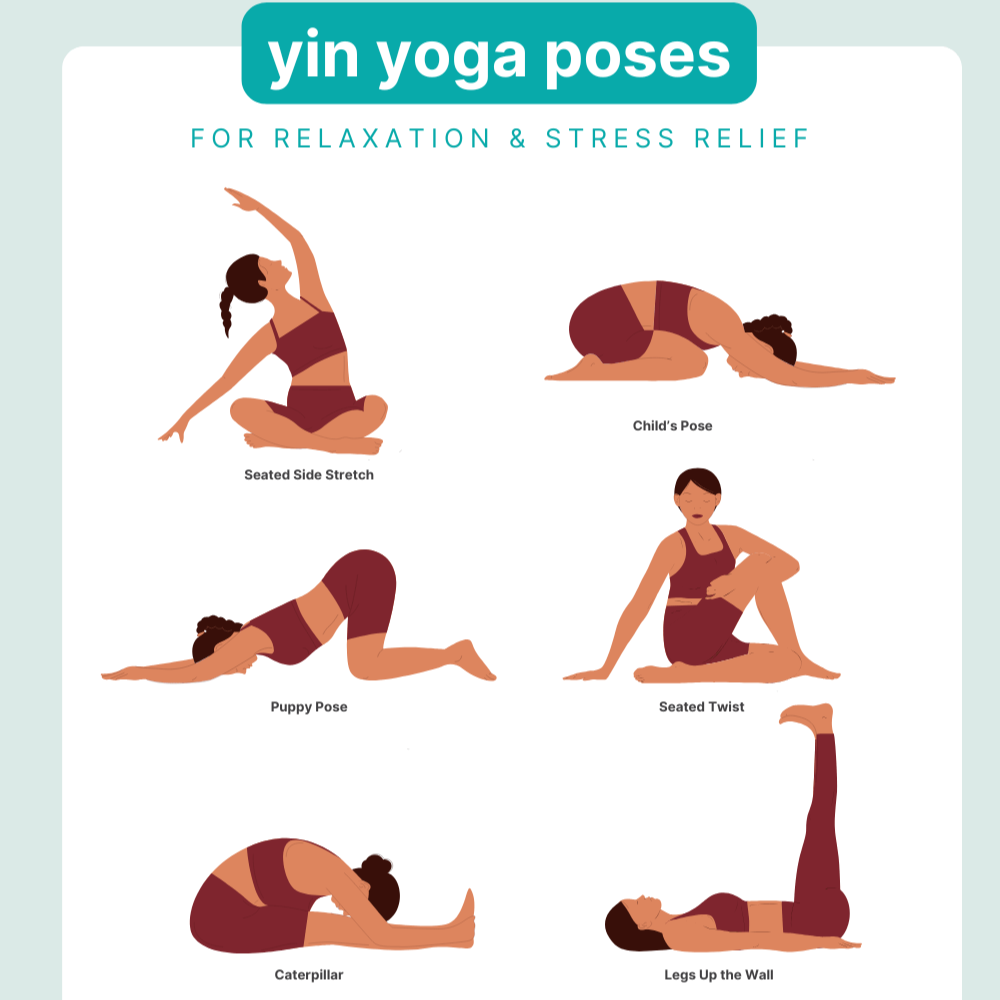
If you’re curious what Yin shapes actually look like, you can explore common poses like Puppy pose, seated twist, and caterpillar below.
In a world that constantly asks us to go…
Yin invites us to stay.
To sit in stillness.
To listen inward.
To soften patterns we didn’t even know we were holding.
Most people don’t realize how much tension they carry until they finally pause.
And when they do…something shifts.
Not because they pushed harder. But because they allowed themselves to stop.
Practice With Us at Inner Light
If your body has been asking for rest, this is your invitation.
We offer Yin classes throughout the week at Inner Light:
Mondays — Yin + Nidra | 6:45 PM
Tuesdays — Yin | 6:15 AM
Fridays — Yin | 9:30 AM
Saturdays - Flow + Yin 10:00 AM
Each class is an opportunity to slow down, soften, and come back into balance—at your own pace, in a supported space.
A Gentle Reminder
You don’t need to be flexible.
You don’t need experience.
You don’t need to “do it right.”
You just need to arrive. And be willing to stay.